How the Dutch Had an Impact on the Indonesian Language

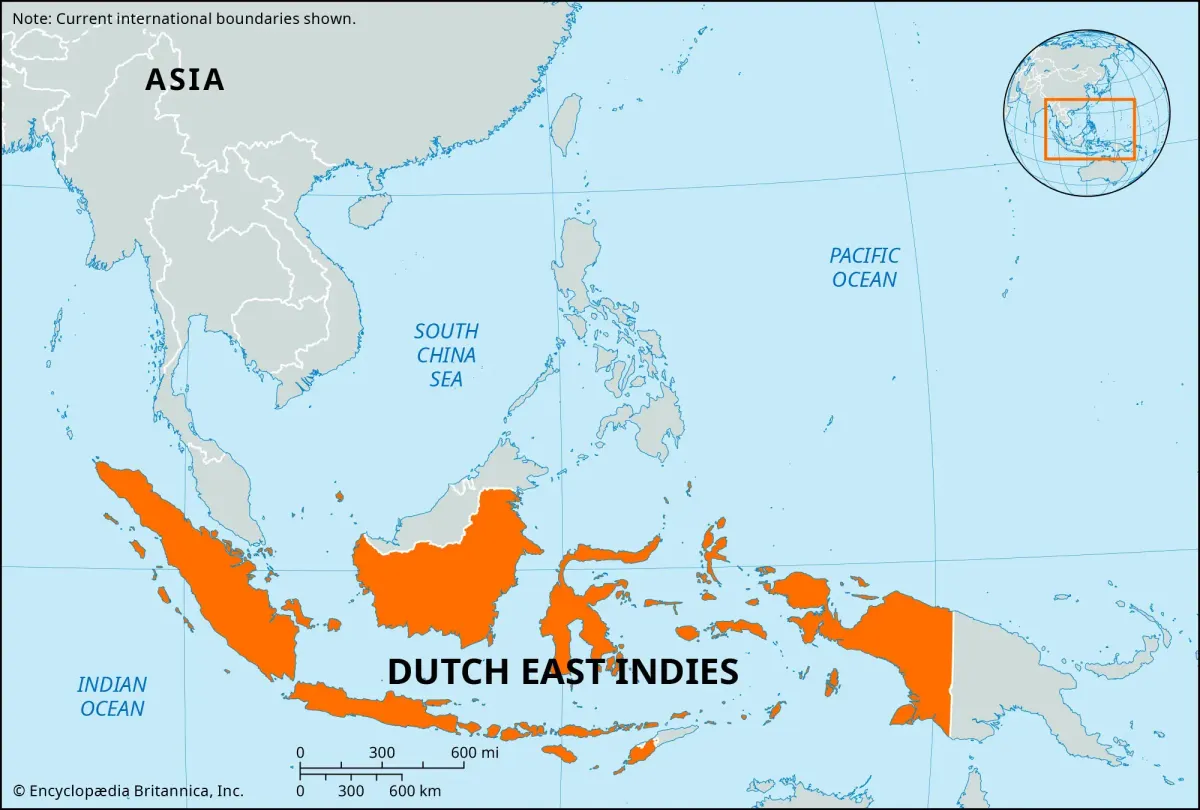
Have you ever stopped to realize that when you say kantor (office), visit a dokter (doctor), or buy a karcis (ticket), you are speaking a living slice of history? The development of the Indonesian language, or Bahasa Indonesia, is deeply intertwined with the archipelago’s complex colonial past. For nearly 350 years, the islands of Indonesia were under Dutch colonial influence and rule. A period of this magnitude does not simply vanish when independence is declared; it leaves a massive, indelible footprint. While the political and economic impacts of the Dutch East Indies are thoroughly documented in history books, one of the most fascinating and enduring legacies is hidden in plain sight: our daily vocabulary.
Linguistic historical studies estimate that thousands of Dutch loanwords are deeply embedded within the modern Indonesian lexicon. To understand how this happened, we must look at the historical context of language contact during the colonial era. Initially, during the era of the Dutch East India Company (VOC), the Dutch had little interest in teaching their language to the local population. They preferred to use local lingua francas, predominantly Malay, for trade and administration. However, as the VOC transitioned into the formal Dutch East Indies government in the 19th and early 20th centuries, the Dutch language became the ultimate symbol of status, education, and bureaucratic power.
With the introduction of the Ethical Policy in 1901, modern educational institutions such as MULO (Meer Uitgebreid Lager Onderwijs) and AMS (Algemene Middelbare School) were established. Dutch became the primary medium of instruction for the indigenous elite (priyayi) and the burgeoning intellectual class. Speaking Dutch was a prerequisite for higher education, securing lucrative government jobs, and participating in the modern colonial economy. Consequently, Dutch words began to seep into the local dialects, eventually integrating into the standardized Indonesian language formulated during the 1928 Youth Pledge (Sumpah Pemuda).
The most prominent and systematic impact of the Dutch language is visible in formal and institutional domains. Because the modern systems of law, government administration, and medicine were introduced by the Dutch, the vocabulary required to navigate these systems was imported directly from them. In the legal and administrative sectors, words like advokat (from advocaat, lawyer), beslit (from besluit, decree), hakim (though Arabic in origin, the legal structure heavily mirrored Dutch systems), and kuitansi (from kwitantie, receipt) became standard.
Similarly, the realms of technology, automotive engineering, and modern architecture in Indonesia are heavily built on a Dutch linguistic foundation. When the Dutch introduced railways, motor vehicles, and modern urban planning, they brought their terminology with them. Today, Indonesians still use knalpot (muffler), rem (brake), busi (spark plug, from bougie), kulkas (refrigerator, from koelkast), and wastafel (sink). Even the word sepur (train) is derived from the Dutch spoor.
However, the absorption of these words was not merely a straightforward process of copy-and-paste. The assimilation occurred through a fascinating linguistic process known as "nativization," where Dutch words were phonologically and morphologically adapted to fit local Indonesian pronunciation and spelling rules. The Indonesian tongue naturally adjusted foreign sounds to make them easier to articulate. Consonant clusters, which are common in Dutch but rare in traditional Malay, were simplified. For example, the Dutch word schroef was transformed into sekrup (screw), and klasse became kelas (class).
Vowel sounds were also shifted to align with the Indonesian phonetic inventory. The Dutch 'oe' sound (pronounced as 'u') was directly transliterated, which is why boek became buku (book) and handdoek became handuk (towel). Spelling was adjusted to fit the local tongue, such as changing the Dutch "j" to "y" (e.g., project becoming proyek) or changing "v" to "p" or "f" depending on regional dialects, as seen in pabrik (from fabriek, factory).
Beyond vocabulary, there was also the phenomenon of semantic shift, where a borrowed word takes on a slightly different or more specific meaning in the target language. For instance, the Dutch word afdrukken refers to the general act of printing, but when absorbed into Indonesian as afdruk, it evolved to refer almost exclusively to the printing of photographs. Korting, which simply means a deduction in Dutch, became the universal Indonesian term for a price discount.
Even the vibrant culinary landscape of Indonesia, celebrated worldwide for its indigenous spices, carries the linguistic echoes of the colonial era. The fusion of Dutch and Indonesian cultures gave birth to words like bistik (from biefstuk, beefsteak), perkedel (from frikandel, minced meat patty), and semur (from smoor, a braised dish). The famous Indonesian layer cake, lapis legit, is intimately tied to the Dutch spekkoek.
The Dutch linguistic footprint in Indonesian is ultimately more than just a colonial residue—it is a testament to the adaptability and resilience of the Indonesian language. Rather than being erased by colonial influence, the language absorbed, modified, and repurposed foreign elements to build a modern, unifying national identity. These thousands of loaned words have evolved, blended seamlessly into our daily conversations, and become an inseparable part of who we are. The next time you speak, remember that our language is a living museum, preserving the complex, difficult, and remarkable historical journey of our nation within every syllable.
References:
- Sneddon, J. N. (2003). The Indonesian Language: Its History and Role in Modern Society. UNSW Press.
- Groeneboer, K. (1998). Gateway to the West: The Dutch Language in Colonial Indonesia 1600-1950. Amsterdam University Press.
- Jones, R. (Ed.). (2007). Loan-Words in Indonesian and Malay. KITLV Press.