
What Happens to a Language After an Empire Falls?
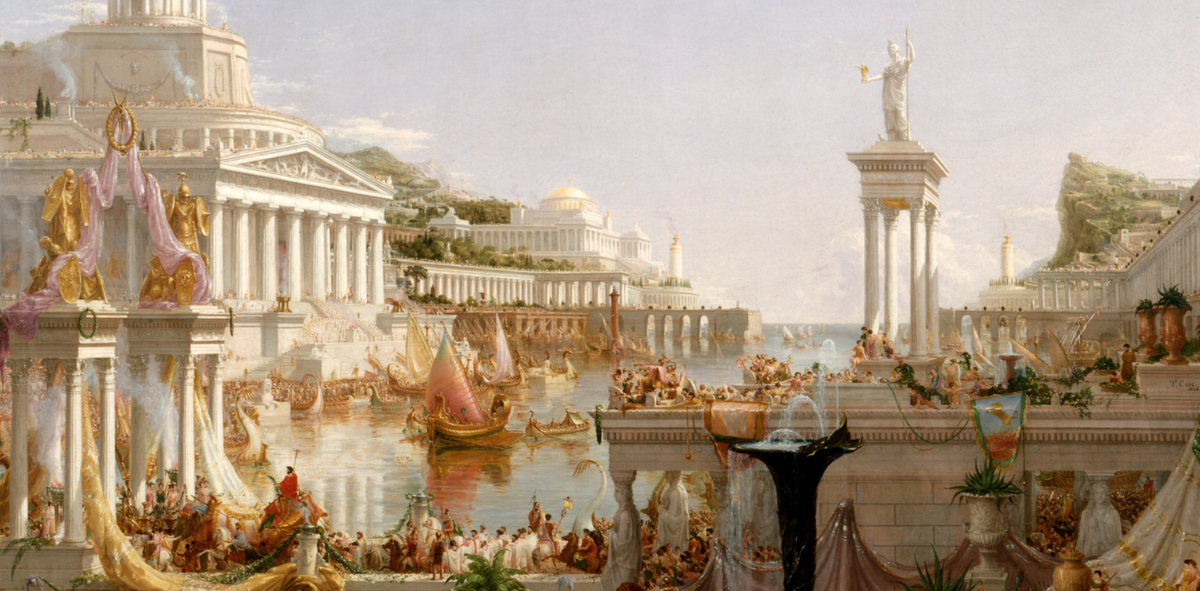
When empires experience decline, major components of their reign, such as institutions, authority, and territory, fade. However, the languages carried along with them rarely vanish. Monarchical languages undergo concealed, complex alterations, switching from intricate governance mechanisms to cultural, religious, and scholarly symbolism. Contrary to popular belief, the downfall of an empire does not necessarily signify the eradication of its language, but rather a reevaluation of its purpose.
One of the most prominent examples of this linguistic redefinition is the foundational language of Latin. Latin lost its function as a unified regulatory language during the collapse of the Roman Empire. Even so, the language itself did not disappear; it evolved. Vulgar Latin fostered the creation of languages such as French, Italian, Spanish, Romanian, and Portuguese (also known as Romance languages) which were all influenced by geography and local culture. In addition to this formation, traditional Latin froze as a language itself, as it was preserved by churches and academic infrastructures. The language morphed into a dialect of modern law, philosophy, and intellect. Latin was able to prosper due to its prestigious reconstruction, not because of the Roman civilization’s endurance.
In retrospect, the Turkish language of the Ottoman Empire went down an alternative path. During the rule of the Ottoman Empire, the language operated as a prestigious governmental code, incorporating Turkish grammatical structure with substantial Persian and Arabic vocabulary. This amalgamation of language composition reflected the extent of the Ottoman Empire’s diversified formation. However, when the empire fell in the early twentieth century, the Turkish language of the Ottomans was seen as politically challenging and ineffective. The new version of the Turkish Republic aimed to separate its rule from its imperial and religious heritage, instilling a wide variety of language reforms. Arabic scripture was replaced with the Latin alphabet, and a multitude of words were excluded due to their impurity in the eyes of the Turkish. Ottoman Turkish did not necessarily advance into a modern, up-to-date successor; it was purposefully discontinued and altered. In today’s world, Ottoman Turkish relishes within historical records and archives that are sealed away from modern Turkish speakers. The language itself isn’t dead, but hidden behind historical and political barricades.
Another clear exemplification of this linguistic alteration is Sanskrit. Compared to Ottoman Turkish and Latin, Sanskrit was not as heavily incorporated internationally, as it was a language with more scholarly intent and religious authority within South Asia. While administrative power shifted within various empires as they flourished and declined, Sanskrit remained at a standstill. The decline of Sanskrit was not because of choice or conquest, but because of its decline in relevance. As other languages became dominant within the world of governance and literature, Sanskrit took the position of a ritualistic and cultural language. Sanskrit today tends to be fostered within religious ceremonies and texts.
The analysis of these major languages and empires illustrates the idea that languages tied to powerful and dominating kingdoms do not exactly disappear or go extinct. Instead, the actions and post-preservation efforts are what matter for languages’ prosperity. Powerful religious and educational institutions have the power to preserve and incorporate ancient languages into today’s world, such as Latin being a political powerhouse. This safeguarding of languages contradicts the assumption that languages automatically disappear after an empire collapses. Instead of languages themselves vanishing, it is more in regard to their influence and functionality in society. Some languages choose to reconstruct their purpose within political and societal contexts, some choose to purposefully deconstruct, and some completely freeze in time. Whether a language continues to play a role in society, no matter how big or small, is in the hands of powerful government systems or institutions that choose to either adapt to current linguistic, political, and educational norms, or discontinue the language as a whole.