
Romanian: The Outsider Romance Language
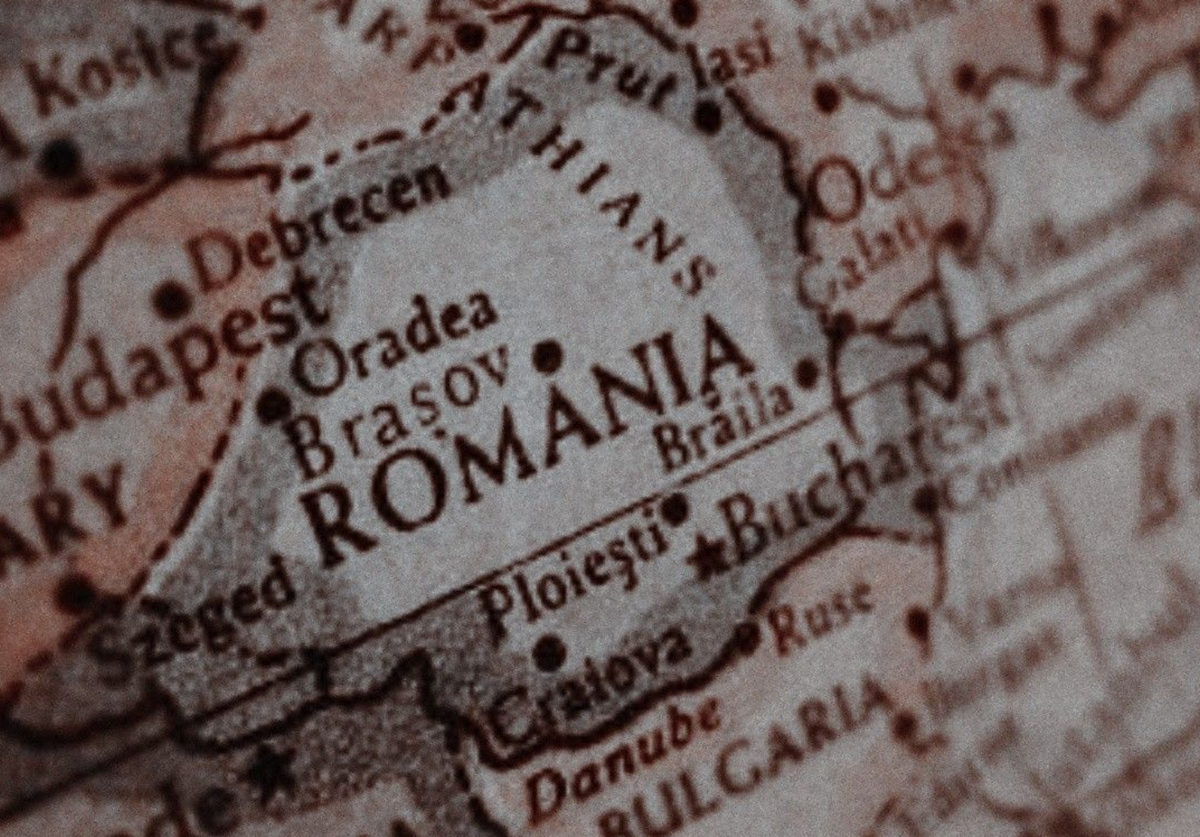
When people think of Romance languages, the branch of languages derived from Vulgar Latin, their minds normally go to the ones found in Southwestern Europe: Spanish, Portuguese, French, and Italian. They’re nicely grouped together from a geographic point of view as well as historic, since they share a similar historical background. But far to the east, separated by mountains and empires, lies an outsider: Romanian. Even though it looks and sounds different from its western relatives, Romanian is a Romance language. Its history of isolation and of contact with Slavic neighbors has made it a distinctive member of the Romance family.
Romanian stemmed from the Roman conquest of Dacia in around 106 CE. Latin speakers slowly started populating the region and Vulgar Latin became the dominant language. Even after Roman rule started withdrawing from the area, Latin speakers remained, gradually evolving their language to create modern Romanian. Situated in the Carpathian mountains and Balkan region, Romanian wasn’t surrounded by other Romance languages. It was influenced by Slavic, Turkic, and Greek populations in a unique way not seen in other Romance languages. It became a linguistic island of sorts.
A striking feature of the Romanian language is its Slavic influence. Surrounded by other Balkan countries, like Serbia and Bulgaria, and east-Slavic countries, like Moldova and Ukraine, Romanian absorbed a significant amount of vocabulary and structural features from these languages. Features like postposed definite articles and infinitives make Romanian unique, as those aren’t commonly seen in other Romance languages. Additionally, the liturgical language Church Slavonic, basically the Latin of eastern Europe, deepened this influence. Romanian is a part of what linguists call the Balkan Sprachbund, an area where unrelated languages share characteristics due to prolonged contact.
Even though Romanian is somewhat Slavic, it’s also important to dive deeper into its other features and, in doing so, further divergence from Romance languages can be seen. Romanian preserves features of Latin that were lost in its relatives. While the western counterparts abandoned the Latin case system, Romanian adopted a simplified version, making it more conservative in a way. When looking at its vocabulary, one can tell that Latin is the heart of Romanian. Everyday words for family, body parts, and more are derived from Latin.
An interesting aspect of Romanian is that it isn’t entirely alone in the Romance world. There is a small Eastern Romance subgroup of languages situated in roughly the same area as Romanian and it includes Aromanian, Megleno-Romanian, and Istro-Romanian. They’re spoken in scattered communities throughout the Balkans, but Romanian is by far the largest member of this branch, having around 24-28 million speakers worldwide.
Despite its multiple non-Romance influences and geographic isolation, Romanian has never stopped being Romance. The language, people, and culture are Latin at heart. It’s not less Romance than its western cousins, it’s Romance forged under a different environment. Romanian is proof that languages don’t evolve in a neat, linear manner. They’re shaped by geography and human interaction, creating beautiful blends of words that might not normally come together.