Languages With No Alphabet: How Oral Languages Survive Without Writing Systems

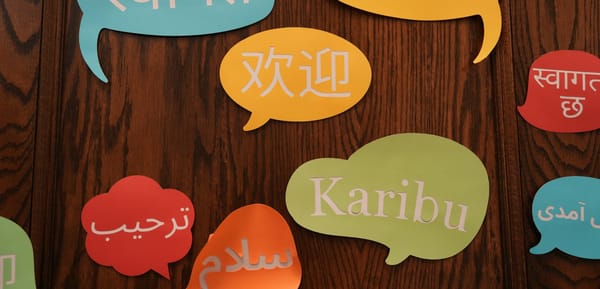
In today’s society, writing is seen as the criterion of linguistic authenticity. Many believe a language becomes real only when it is written down: when it has an alphabet, a dictionary, or some form of legitimized print. However, this notion ignores a rudimentary truth: for most of human history, language has been prominent without any form of written records. Currently, thousands of languages are able to thrive without alphabets, solely sustained through means of oral communication. The preservation of these languages confronts the common belief that writing is required to maintain a language’s complexity and cultural continuity.
Writing is a rather recent invention, as archaeological evidence suggests the earliest writing systems started around five thousand years ago, long after humans had established nuanced spoken languages capable of effectively expressing emotion, social structure, and law. Linguists estimate that over forty percent of the world’s approximately seven thousand languages do not utilize a standardized writing system. These languages are not underdeveloped or fragmentary, as they are comprised of complex grammar, syntax, and meaning that thrive solely through oral communication. Oral languages carry on through structured systems of performance and memory, and knowledge is channeled through ritual speech, storytelling, and song. Oral narrations heavily rely on rhythm, repetition, and conventional phrasing, which all serve as standard methodologies that support long-term memory. Extensive research on oral traditions highlights that collective storytelling and correction aid in preserving the precision of language over time, even without the use of written records.
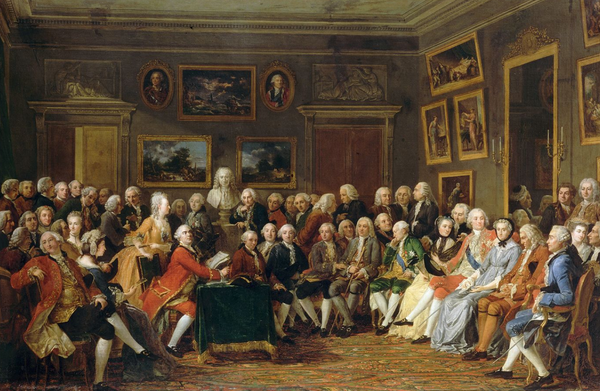
It is common to see elders as living records in many oral communities. History, law, and cultural values are preserved by individuals rather than books. Anthropological studies of Indigenous groups determine that elders are able to remember complex environmental knowledge, legal customs, and ancestries through oral recall. Unlike written texts, which set a fixed meaning at a certain point in time, oral transmission permits language to remain flexible and adaptable while simultaneously preserving core beliefs. Environmental knowledge illustrates one of the clearest examples of oral accuracy. For instance, in Australian Aboriginal cultures, geographical and navigational components are tied into songlines, which are oral narrations that map landscapes through storytelling and song. These structures impart a thorough ecological and spatial understanding without the use of physical maps, highlighting how oral language can take on the role of guidance and memory.
The persistence of oral languages also supports the idea that writing is not a natural development, but a cultural choice fueled by history and power. In various instances, writing and record systems have been implemented through missionary or colonial influence, often altering or erasing cultural sophistication. Due to this distortion, some communities have resisted externally imposed standardization, choosing to maintain oral cohesion rather than implement forced scriptures that detach communication from actual experience.
Despite this resistance, oral languages undergo extreme vulnerability in today’s world. Since these languages rely heavily on intergenerational conveyance, interruptions like migration, language shift, and forced assimilation can cause rapid decline. Many linguists report that when children do not learn an oral language at home, the language can disappear within a single generation. However, this susceptibility does not reflect weakness, but rather the immense importance of communal and daily use in preserving oral languages.
Languages without a fixed writing system illustrate how writing is not the ultimate foundation or sole component of memory and meaning within a language. Languages thrive through story, speech, and collective experience. Preserving oral languages is more than simply recording the lexicon and grammar system; it's protecting the distinct ways of knowing, remembering, and being human.