Languages that Made a Eurovision Cameo
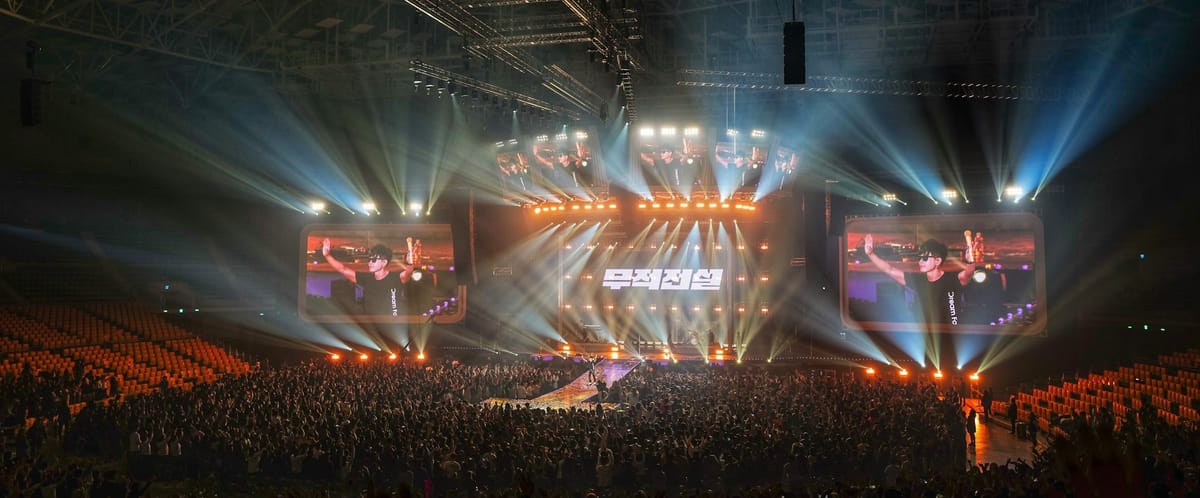
The Eurovision Song Contest (ESC) is the world’s longest-running annual TV music competition, but did you know it’s also a linguistic powerhouse? With an impressive impact of over a hundred million viewers, the contest presents itself as a hub of national identity—and language is a key part of it. While English has become the dominant medium of performance, we occasionally see powerful moments of divergence in the form of minority languages. Whether these linguistic cameos appear for fun or serious reasons, they’re all considered meaningful appearances that promote cultural identity.
In Eurovision 2022, one selected song was “Fulenn” written by Alvan, a electro artist from Brittany, France, and Ahez, a traditional Breton vocal group. Unlike French, a Romance language, Breton is a Celtic language, related to Welsh, Irish, and more. Due to the standardization of French as a majority language, regional languages like Breton have been historically oppressed. People who spoke Breton were once humiliated and forced to speak French, leading speaker numbers to dwindle. However, revitalization efforts, such as Breton immersion schools, have led to slow but steady progress.
"Fulenn," meaning "spark," is based on a Breton legend about a lady who loved to dance, but was forbidden to. She was placed in a tower, but managed to escape—a story of freedom and emancipation. By fusing traditional vocal styles and contemporary electronic production in "Fulenn," Alvan & Ahez deliver a powerful blend of two distinct styles. The song symbolizes Breton not as a language of the past, but one that can be revitalized in modern times and adapted to cater to a global audience. When the song was performed in Turin, Italy, the audience was fired up with energy with the rave-like nature of the song. Even though it placed 24th, the inclusion of Breton in Eurovision that year challenged France’s monolingual national image and brought international visibility to a language not often spotlighted.
After winning the Norwegian Melodi Grand Prix in 2019, the group KEiiNO were set to go to Eurovision that year with their song “Spirit in the Sky.” Even though the song is mostly in English, it hides a surprise. Part of the Uralic language family, the Sámi languages are spoken by people indigenous to the northern regions of Nordic countries. Because those countries began shifting towards majority languages like Norwegian and Swedish, the use of Sámi languages has massively declined. Northern Sámi, the most spoken variety, has been listed by the UNESCO Atlas of World Languages as "Definitely Endangered," while others are even more threatened. Just like Breton, though, there have been notable revitalization efforts made through community initiatives.
KEiiNO’s song was about the Sámi belief that nature offers you peace during difficult times. It makes sense, as the Sámi people viewed nature as sacred, containing all the resources needed to live. While listening to the EDM track, you hear both English and Sámi, but also joik, a traditional Sámi singing style performed by member Fred Buljo that uplifts the cultural identity of the song. The upbeat performance in Tel Aviv that year earned Norway a 6th place finish. Beyond its success, “Spirit in the Sky” showcases Eurovision as a platform to showcase minority languages within mainstream media. KEiiNO presented Sámi culture as a living, evolving tradition.
Ukrainian artist Jamala was selected to go Eurovision with her song “1944” in 2016. Written in English and Crimean Tatar, the latter language is the focus of the story. Crimean Tatar is a Turkic language spoken on the Crimean peninsula, a heavily disputed territory. 1944 marks the year of the deportation of the Crimean Tatars by the Soviet Union, many of whom died in exile. This was particularly meaningful to Jamala as her great-grandmother experienced this horrific event firsthand and had to witness her own daughter's death. The historical significance of “1944” coincidently ties in with the current political turbulence occurring in this era between Ukraine and Russia, illustrating how some tensions simmer through generations with an unknown future outcome.
The chorus of “1944” is taken from traditional Crimean Tatar folk song “Ey Güzel Qırım,” which is about being unable to return to one's homeland and peace being taken away. The song also includes the Armenian duduk instrument and Azerbaijani mugham singing, creating a hauntingly beautiful masterpiece of a song. With Jamala’s emotional performance on the Eurovision stage in Stockholm, she ultimately took the win for Ukraine that year. By incorporating the story and language of the Crimean Tatar people in her song, Jamala helped the audience open their eyes to their overlooked oppression and the enduring consequences of displacement. Her performance proved how language in music can transcend entertainment and be used for cultural assertion.
Together, these case studies demonstrate how the Eurovision Song Contest can function as more than a music competition, serving as a platform for language visibility and cultural expression. Through the inclusion of Breton, Sámi, Crimean Tatar, and more, Eurovision diverts the public’s attention from dominant languages to ones that are less known, but still carry the same rich history that majority languages do. While these appearances may come only once in a while, they highlight the connection between language, cultural identity, and the role of media in shaping visibility for overlooked communities.