Japan's Lost Language: Ainu
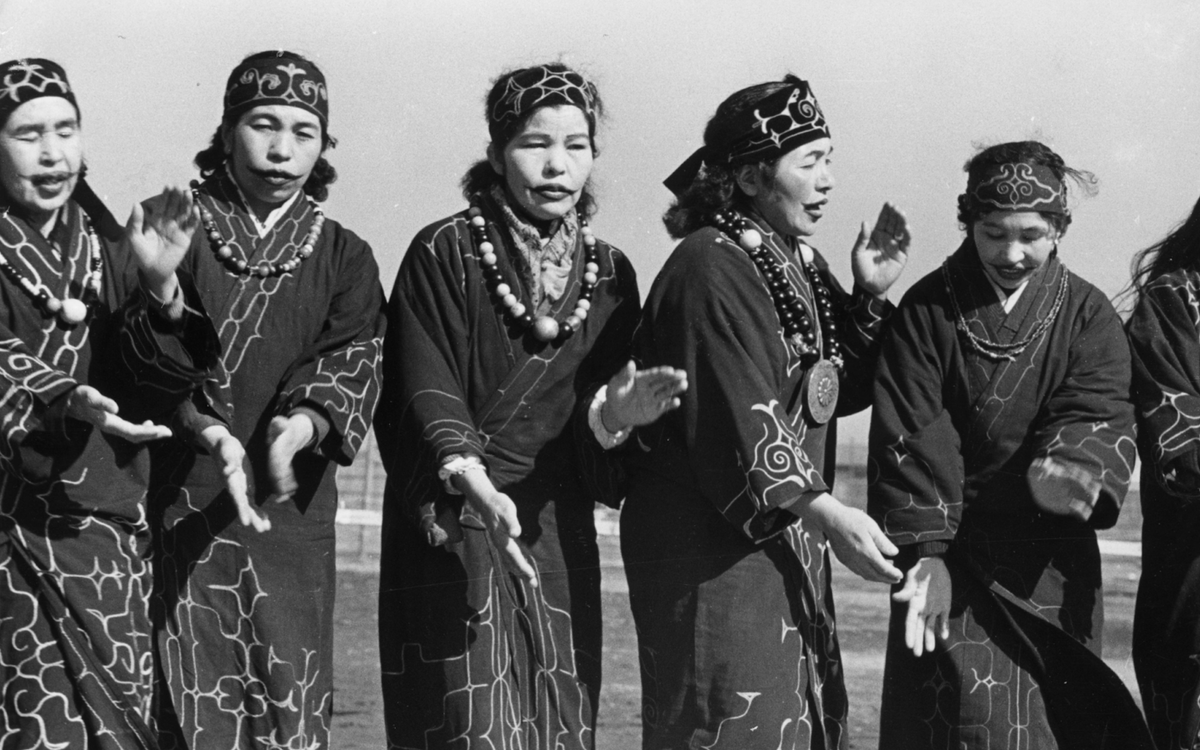
In northern Japan, there lies an island called Hokkaido where a language lurks through the villages and forests. For centuries, the Ainu people passed down stories and traditions through a unique language unrelated to Japanese, the main language of Japan, or to any other language, in fact. Today, however, the Ainu language is considered critically endangered, with only a handful of fluent speakers remaining. Despite this decline, efforts have been made to preserve this remarkable piece of the Ainu people’s heritage.
The Ainu are an Indigenous people group from northern Japan, particularly Hokkaido, as well as parts of Sakhalin and the Kuril Islands. For centuries, Ainu communities lived by fishing, hunting, and gathering, which made the people feel closely connected to nature. Their oral traditions included songs and stories that preserved history and cultural knowledge.
However, in the beginning of the 19th century, the Japanese state expanded into Hokkaido and it drastically affected Ainu society. During the Meiji Restoration period, government policies promoted assimilation into Japanese culture. Ainu people were discouraged from speaking their language, and many were pressured to adopt Japanese culture. This led to a sharp decline in Ainu language transmission across generations.
A fascinating aspect of the Ainu language is that it is considered a language isolate. This means that it has no proven relationship to any other language family. Unlike Japanese, which belongs to the Japonic family, Ainu stands by itself.
Linguistically speaking, Ainu has several distinctive features. It is an agglutinative language, meaning that grammatical information is added through suffixes attached to a root word. Words can contain many meaningful parts that indicate tense or grammatical relationships. Another feature is the verb-centered structure. Ainu verbs often incorporate information about both the subject and the object within the verb. The sound system of Ainu is rather simple compared to many languages, with a small number of vowels and consonants. The language has no widely adopted writing system and is primarily transmitted orally.
Today, the Ainu language is considered critically endangered. Most fluent speakers are elderly, and the number of people who learned the language as their first language has declined drastically. Many younger people have grown up speaking Japanese due to discrimination and assimilation policies. Only a small number of fluent speakers remain today. Because the language was primarily oral, the loss of speakers meant the loss of traditional stories and songs embedded in Ainu.
Despite the many challenges the Ainu people have faced, there are ongoing efforts to preserve and revitalize the language. Cultural organizations and language activists have worked to document vocabulary, grammar, and more linguistic features before they disappear. In recent years, the Japanese government has taken steps to recognize the cultural importance of the Ainu people. Cultural centers and museums have been established that promote Ainu language education and cultural awareness. Language classes, dictionaries, and teaching resources have been developed so that younger generations can learn Ainu, even if they did not grow up speaking it at home. Some schools and programs now offer opportunities to study Ainu, which allows people to reconnect with their heritage.
The story of the Ainu language has two sides. One side reflects the near loss of the language, when the Ainu people were forced to assimilate into Japanese culture. On the other hand, current efforts to preserve the language are ongoing, showing that people still care about preserving languages and history. Ainu remains a powerful reminder of the importance of protecting linguistic diversity and cultural identity around the world.