Formal to Informal: How Our Language Has Evolved in the Past 500 Years
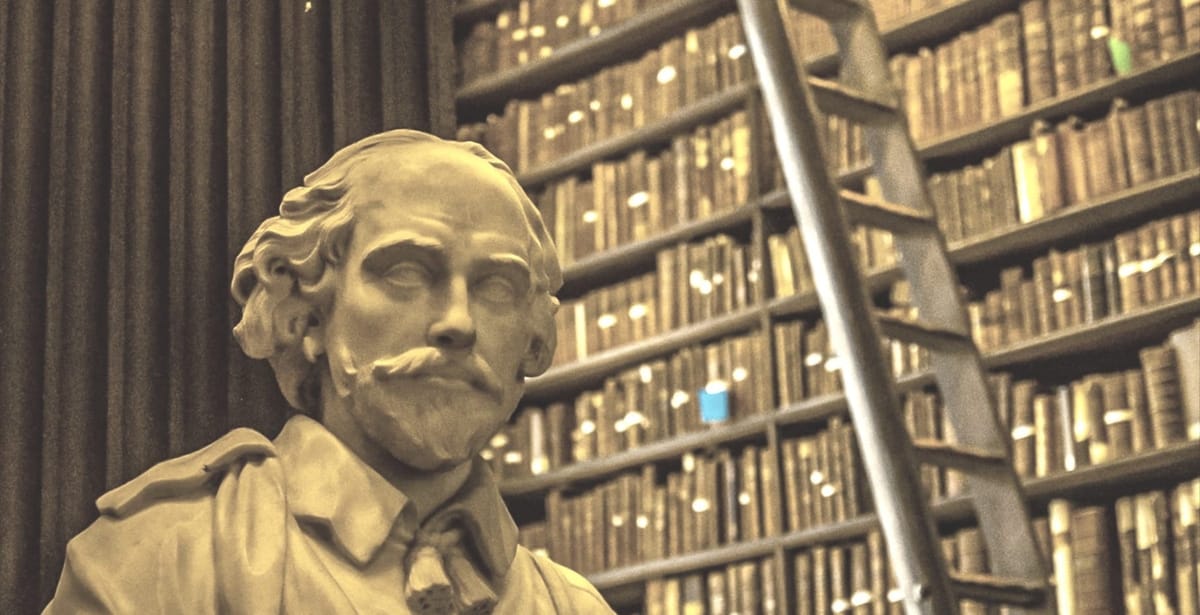
“With mirth in funeral and with dirge in marriage / In equal scale weighing delight and dole.” — Hamlet, William Shakespeare
Over the past five centuries, we have transitioned from layered, metaphor-rich expressions, such as Shakespeare’s above quote, to brief, almost skeletal forms, like “sup bro” or “TBH.” How did this shift occur? How did a language once shaped by poetic depth evolve into one that prioritizes speed over nuance?
It is easy to blame digital communication, but the transformation runs deeper. Letters and instant messages differ primarily in pace, not intention. Yet the pace of life itself has changed so dramatically that language could not help but adapt.
Before the rise of digital media, language functioned as a vessel for expression, storytelling, and emotional resonance. In plays, letters, and songs, words have historically carried multiple meanings because they had to sustain attention, evoke imagery, and create atmosphere. With the arrival of mass digital media, expression migrated toward visual cues like emojis, symbols, reaction images, and as a result, linguistic depth became compressed.
As time evolved, so did the rhythm of human life. The world accelerated, attention became fragmented, and people began juggling responsibilities at every hour. In such a landscape, time became a resource constantly slipping away. Naturally, language adjusted: it shortened, sharpened, became efficient.
In Shakespeare’s era, literacy itself was a marker of privilege. Writers were trained, educated, and socially elevated, and their language reflected that exclusivity. Today, writing is no longer reserved for the elite; rather, it is universal, relentless, and accessible. When millions participate in daily communication, language levels itself, contracts into simpler forms, adapts to the speed of modern life, and becomes inclusive rather than ornamental. Modern English is not “worse,” it is more democratic.
Another subtle shift lies in the purpose of language. Historically, elaborate phrasing signaled intellect, education, and status. Today, clarity and efficiency are valued over ornamentation. Expression is no longer proof of literacy, but simply a tool of connection. The journey from Shakespeare to shorthand is not a decline but an evolution—one that mirrors the changing tempo of human life.